
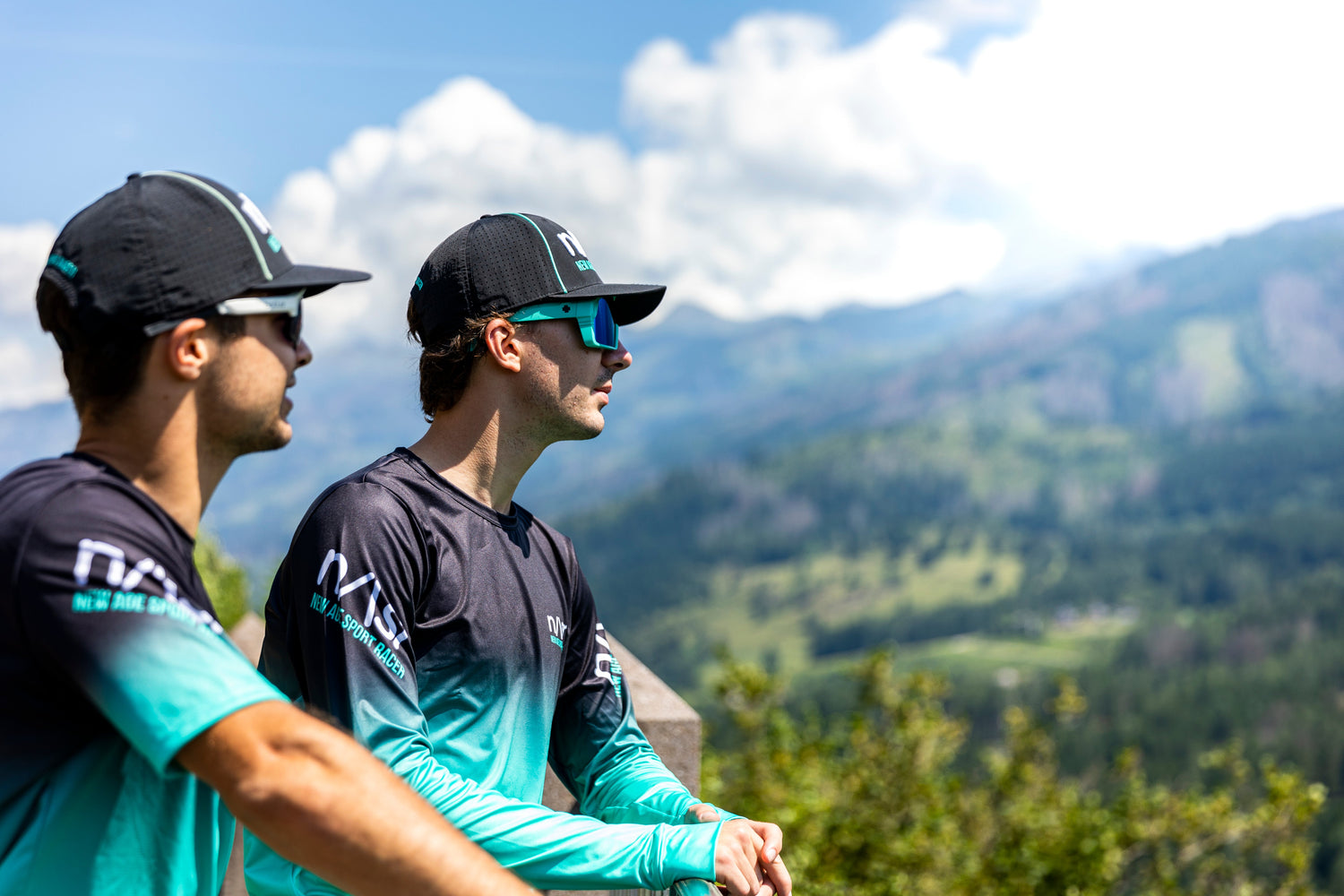
Summer looks like the easiest season to train: long days, more stable weather, more hours of light and more chances to move outside. In reality, it is one of the hardest to manage, because heat does not stop you immediately, it consumes you little by little.
It lets you start well, makes you feel light in the first minutes and gives you the illusion that everything is under control, then the temperature rises, the body starts losing fluids, breathing changes, clarity drops and movement quality becomes harder to maintain.
That is why training in summer does not mean doing more, but doing better, choosing timing, context, rhythm and intensity with more attention. Whether you are on the bike, in the gym, on a gravel road or inside an XT session, the principle does not change: heat raises the cost of every wrong choice.

In cycling, you feel this immediately, especially when you move toward gravel, Lake Garda, mountain passes, secondary roads and dirt tracks, where absolute speed matters less than the ability to read terrain, wind, distance and temperature.
Starting at 6:30 or 7:00 is not a romantic choice, but a technical one, because it allows you to use the hours when the body works better and reach the hardest sections before heat starts turning every change of rhythm into a higher cost than expected.
The same logic applies off the bike: a well-executed XT session in the middle of summer is not only about exercises, but about managing the system, because you have to know when to push, when to recover, how much volume to add and how much margin to leave the body in order not to lose quality.

Summer cross training should not become a way to destroy yourself without direction, but a space where you continue to build strength, mobility, stability, reactivity and the ability to resist effort without losing efficiency.
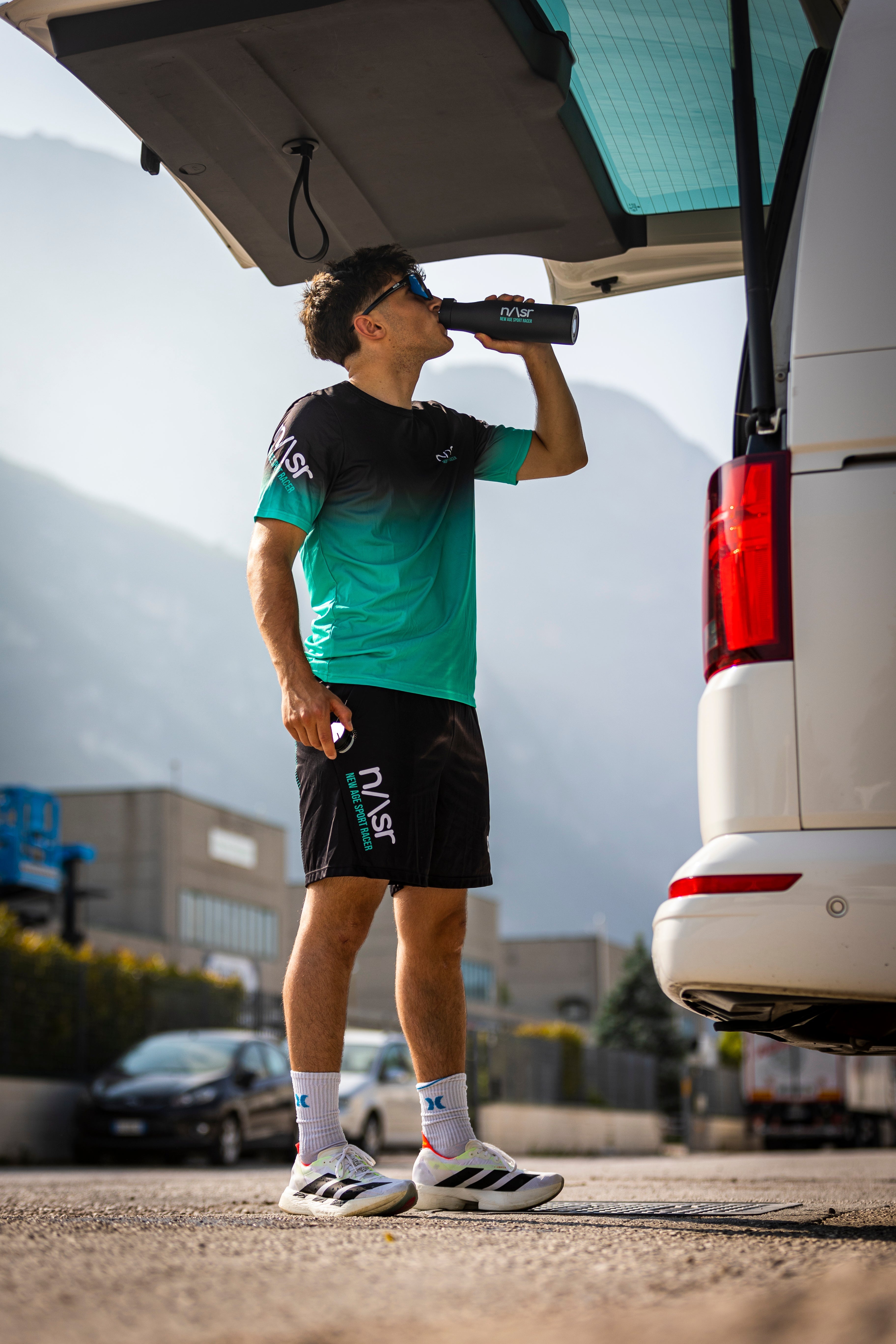
Training in the heat requires margin, and hydration enters this strategy long before thirst. If you wait until your mouth is dry, your head feels heavy or movement quality drops without a clear reason, you are already late, because the body does not lose efficiency all at once, but through small losses that build up while you keep pushing.
During long, hot or very intense sessions, a realistic base can be around 500–1000 ml per hour, to be adjusted depending on temperature, sweat rate, duration and intensity. But the number alone is not enough if it does not become behavior: drinking small sips regularly works better than remembering water only when you are already empty.
For a short and controlled session, plain water may be enough; when hours increase, heat rises and sweat becomes a central part of the session, adding electrolytes, especially sodium, can help you maintain better balance and clarity.
The point is not to drink more at random, but to drink earlier, drink better and know where you will be able to do it again, because in summer the problem is not only losing fluids, but realizing it when it is already too late to recover without paying for it.

A summer session has to make sense not only on the plan or on the route, but inside the real day in which you decide to do it: if you know it will be hot, you do not look only at distance, elevation, loads or volume, but also at exposure, timing, water points, recovery, intensity and the possibility of adapting the work.
Going fast in summer does not mean ignoring the heat, but managing it well enough to keep going fast when others start paying for it.
The kit is not a detail here: in cycling it has to work between wind, sweat, descents and heat, while in training, t-shirts, shorts, tights and XT layers have to support movement without holding you back, distracting you or adding noise to a session that already has enough variables to manage.
Training in summer is not about looking for perfect conditions, but knowing they do not exist: it means starting earlier, choosing better, drinking before thirst, eating before you empty yourself, looking for altitude when needed, adapting the work when needed and accepting heat without suffering it.
On Lake Garda, on the mountain passes, inside an XT session, on a gravel road or in a functional workout, the principle stays the same: the one who wins is not the one who ignores the conditions, but the one who reads them first, keeps quality when heat tries to break it and reaches the end without wasting energy on avoidable mistakes.
NASR Training Season
Do not suffer the heat. Read it. Manage it. Keep moving.

Leave a comment
All comments are moderated before being published.
This site is protected by hCaptcha and the hCaptcha Privacy Policy and Terms of Service apply.